Gutters and guards for Meridian's cloudbursts and snowmelt
Seamless aluminum sized for a June downpour, hung on hangers that hold under January ice, and guards that don't turn into an ice shelf. Plus downspouts that put water where it belongs.
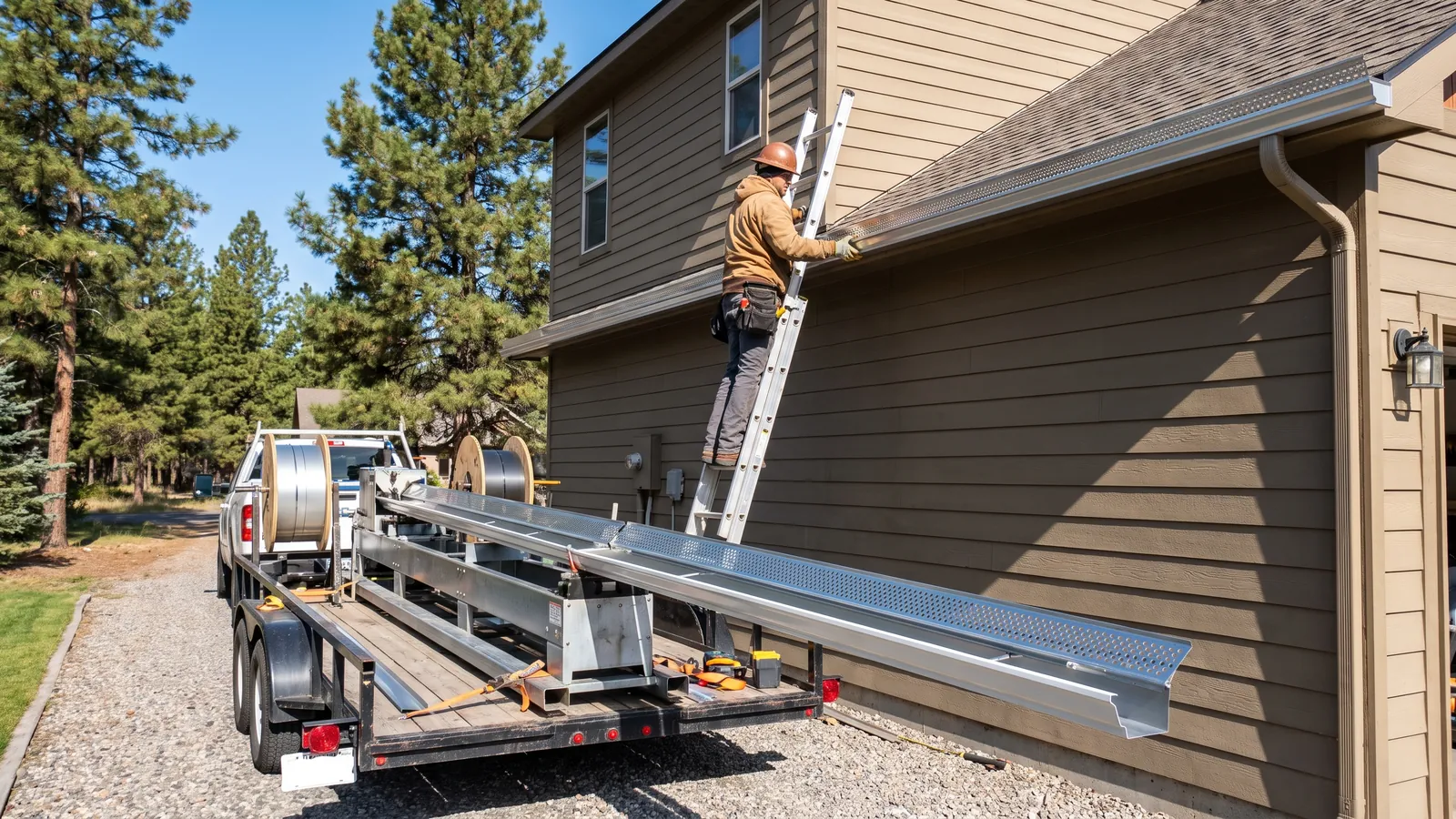
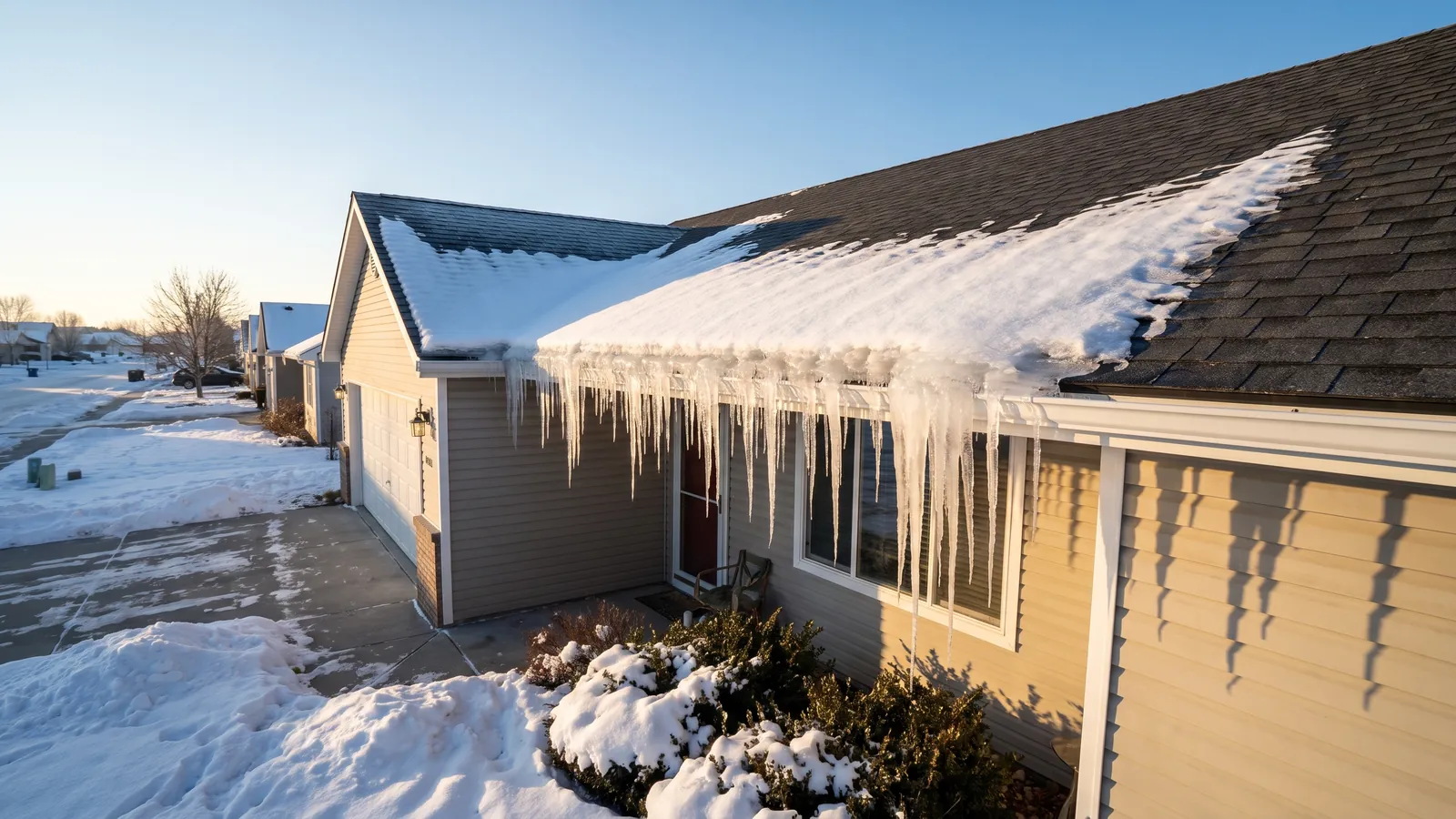
Gutters in the Treasure Valley do two different jobs in two different seasons. In summer they have to swallow a thunderstorm cloudburst — the June 27, 2026 storm dropped more than an inch on parts of the valley in fifteen minutes — and get it away from the foundation and the neighbor's lot line. In winter they have to carry snowmelt and stand up to the weight of ice at the eave, which is what rips spike-and-ferrule gutters loose on the north side of half the houses in Paramount every February.
We install 5- and 6-inch seamless aluminum, formed on site in one piece, hung on hidden hangers screwed into the fascia every 24 inches (every 16 on north eaves), pitched properly to the downspouts, and with downspouts sized and placed so water discharges away from the slab — a real issue on Meridian's flat lots, where a downspout that dumps at the foundation is the source of half the wet-crawlspace calls. Gutter guards are worth it here for a specific reason: the cottonwoods and silver maples in the older neighborhoods, and the ash and pine litter in the newer ones, plus the ash from wildfire-smoke summers. We install the perforated and micro-mesh guards that shed snow rather than the reverse-curve style that builds an ice shelf.
What's included
Seamless aluminum, 5" or 6"
Formed on site to the exact length, .027 or .032 gauge, 20-plus colors to match fascia and trim.
Hidden hangers
Screwed every 24 inches (16 on north eaves), not spiked — the fix for gutters pulled loose by ice.
Downspout planning
Sized for the roof area, placed so discharge goes away from the foundation and off your neighbor's lot.
Guards that survive winter
Perforated aluminum and stainless micro-mesh; no reverse-curve guards that become ice shelves.
Fascia & drip edge
Rotted fascia replaced and drip edge added where the builder skipped it, so water doesn't run behind the gutter.
Cleaning & repair
Reseal, re-pitch, rehang and clean-outs on gutters that just need attention.
Gutters & gutter guards cost in Meridian, ID
| Job | Typical price | Notes |
|---|---|---|
| Seamless aluminum gutters, per linear foot installed | $9 – $14 | 5-inch, hidden hangers, downspouts included |
| 6-inch seamless gutters, per linear foot | $12 – $18 | Larger roofs, steep pitches |
| Gutter guards, per linear foot | $8 – $22 | Perforated to micro-mesh |
| Typical 2,000 sq ft home, gutters and downspouts | $1,600 – $2,800 | ≈ 160–200 linear feet |
| Gutter cleaning and reseal | $150 – $325 | Per visit |
| Fascia board replacement, per foot | $12 – $24 | As found |
These are 2026 Treasure Valley ranges so you can budget. Your written price is itemized — tear-off, decking, underlayment, ice barrier, flashing, vents, disposal, permit — and good for 30 days.
Recent work
Questions we get about gutters & gutter guards
Do I need gutters in a dry climate?
Yes, and more than you'd think. Twelve inches of rain a year here comes in a handful of cloudbursts and a slow snowmelt, and both put water at the foundation if there's nothing to carry it away. Meridian's flat lots and clay-ish subsoil don't drain fast.
Do gutter guards cause ice dams?
The wrong ones do — solid reverse-curve guards let meltwater run over the edge and refreeze into a shelf. Perforated and mesh guards let water through and shed snow. Ice dams themselves come from attic heat, not gutters; see the ice-dam page.
Can you replace gutters without replacing the roof?
Yes. Gutters are a one-day job on their own. If the drip edge is missing or the fascia is rotted, we fix that at the same time.
How far should downspouts discharge from the house?
At least four to six feet, and on Meridian's flat lots we often add underground drain lines to a pop-up emitter in the yard so the water doesn't just sit at the corner of the slab.
Do gutters come with the roof replacement?
They're priced separately, but doing both at once saves the second trip and lets us set the drip edge and gutter apron correctly under the new shingles.